Shem Creek Outpost

← The Outpost
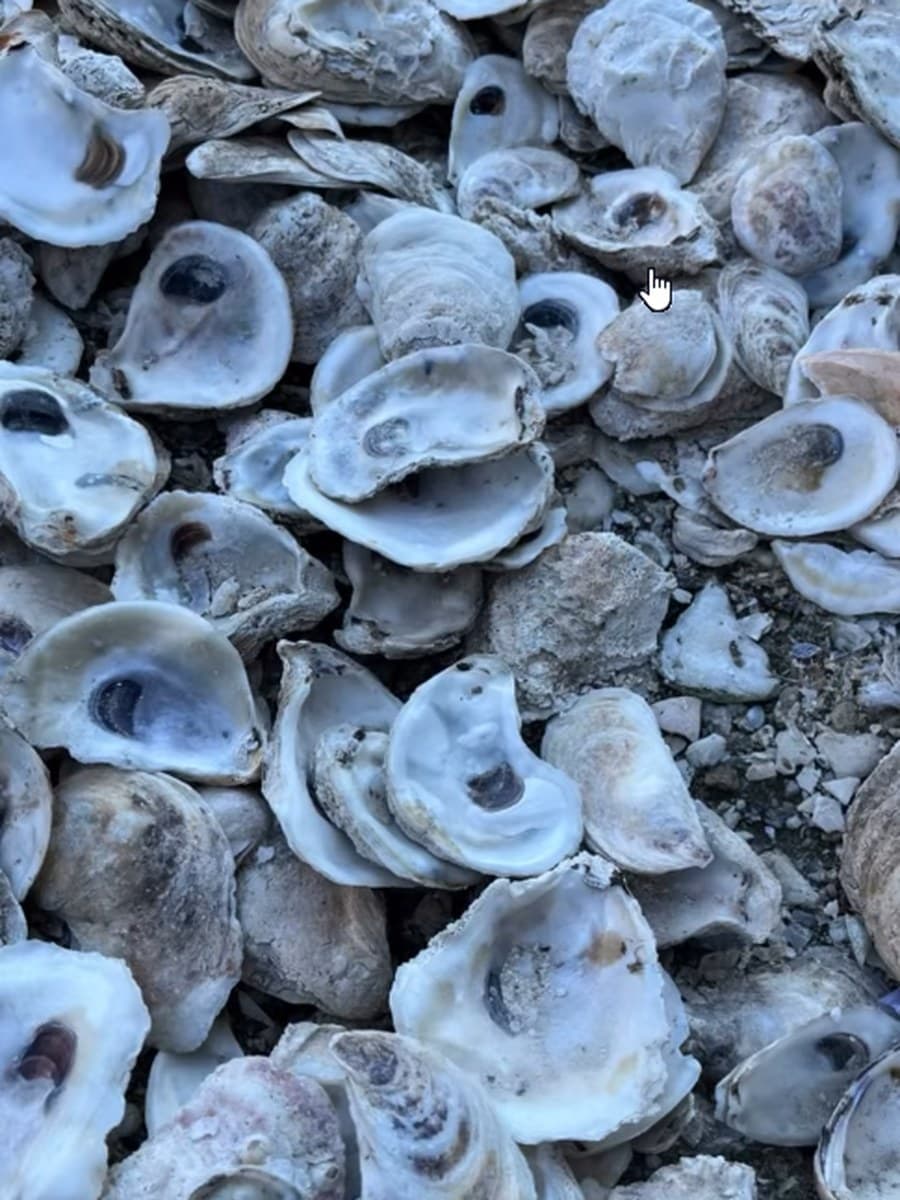
A pile of empty oyster shells at Shem Creek after a Lowcountry roast

The Pile of Shells

Lowcountry Oysters

Crassostrea virginica · Shem Creek, Mt. Pleasant

At low tide the creek gives up its bones. The reefs surface in jagged, gray-black clusters bedded in pluff mud — sharp, irregular, grown oyster-on-oyster over generations. Nothing like the tidy singles on a raw bar. And the heap of empty shells left after a roast isn’t trash. In the Lowcountry it’s understood as the seed of the next reef.

Read more

The Story

Grown Oyster on Oyster

The wild oyster here builds itself the hard way. One larva settles on the shell of the one before it, and then another on that, set upon set, until a cluster stands a foot thick — thin, elongated, irregular shells locked together in the mud. Because South Carolina’s oysters grow overwhelmingly between the tides, they spend half their lives in open air; twice a day, at low water, each one seals up tight. That hardship is the point. The air-drying strengthens the shell, deepens the cup, and concentrates the brine into something that tastes unmistakably of this creek. Prying single oysters off a reef is brutal work, so the Lowcountry never bothered — it breaks off the whole cluster and sells it by the bushel.

The Oyster

The particulars

Who
The eastern oyster, Crassostrea virginica
How it grows
Intertidally, in the zone bared between the tides
The shape
Wild clusters, oyster-on-oyster, sold by the bushel
The season
Traditionally the months with an R — roughly September to April
The roast
Steamed under wet burlap, shucked at the table
The shells
Recycled, quarantined six months, planted back as reef

The shells go back

The Seed of the Next Reef

A young oyster needs a hard, clean surface to land on, and the best surface there is happens to be old oyster shell. So in the Lowcountry the pile goes back in the water. Through SCDNR’s SCORE program — South Carolina Oyster Recycling and Enhancement — recycled shell is quarantined at least six months to clear out disease and hitchhikers, then planted in the estuary, where free- swimming spat can grab hold and grow into new reef over one to three years. Those reefs earn their keep. They break the waves that chew at the marsh, shelter red drum and blue crab and flounder and shrimp, and every adult oyster quietly filters tens of gallons of water a day just by feeding.

The quarantine

6+ months

Recycled shell sits in the sun before it ever goes back in the water.

What it shelters

~120 species

Red drum, blue crab, flounder, shrimp — a reef is a nursery.

On the creek since

1890

William Hale's oyster factory, generations before the shrimp boats.

More from the Outpost

More from the Creek →

32.7858° N · 79.8636° W